Every September, Hunger Action Month brings attention to an issue affecting millions of people across the United States: food insecurity.
For many families, access to food can be a daily challenge. Students may lose access to school meals during summer break, rural communities may face additional barriers to obtaining healthy food and local food banks often work to meet growing demand with limited resources.
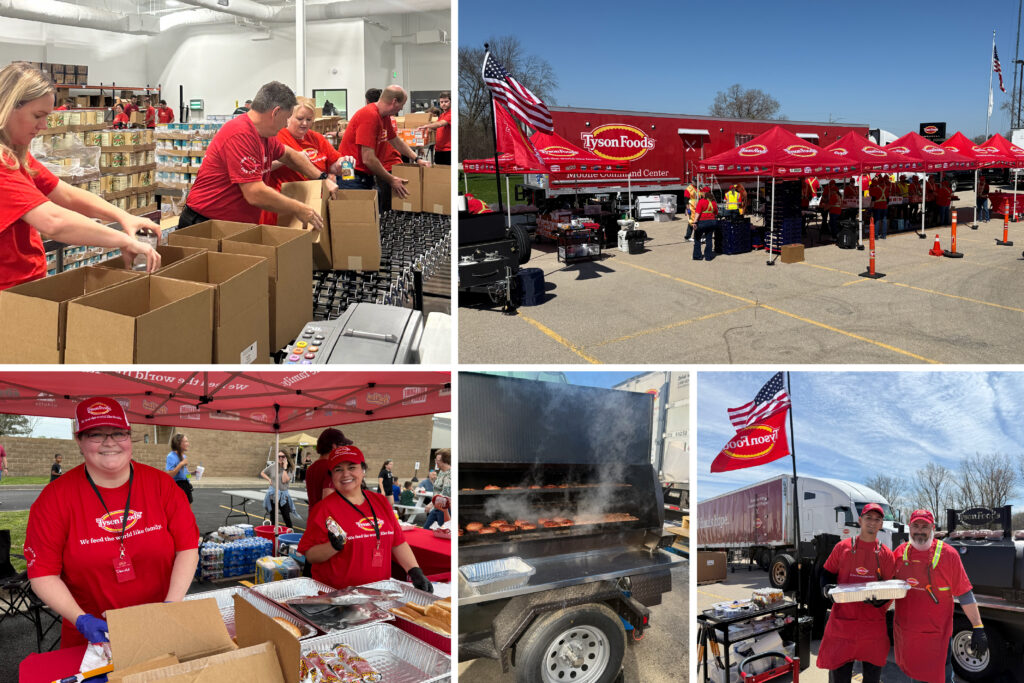
At Tyson Foods, helping address hunger is a year-round effort. Through partnerships with nonprofit organizations, schools and food banks, we’re working to help improve access and strengthen the systems that support families and communities.
Supporting Students Through Summer Meals
Summer can be one of the most challenging times for students who rely on school meals during the academic year. That’s why Tyson Foods partnered with GENYOUth to help make nutritious meals more accessible when school is out.
This past summer, our partnership helped provide meals and activity kits across Georgia and Arkansas, reaching 18 school districts and 286,000 students. Together, the program organized more than 620,000 meals for children who might otherwise have limited access to them. Meals and resources helped fill a critical gap when school was out of session, extending access to nutritious food during the summer months.
The summer meal initiative built on Tyson Foods’ long-standing relationship with GENYOUth. To date, our company has contributed $800,000 to support school meal carts during the academic year and summer meal programs.
Investing in Childhood Nutrition and Food Access
In August, Tyson Foods committed $1 million over two years to Harvest to Hallways, a new childhood nutrition and food access initiative announced by the U.S. Department of Agriculture and U.S. Department of Health and Human Services.
Working alongside GENYOUth, Boys & Girls Clubs of America and the Food Research & Action Center, the program is designed to help expand access to school meals, strengthen nutrition education and improve meal access in rural communities.
These investments reflect an important part of Tyson Foods’ approach to addressing food insecurity: partnering with organizations that understand local needs and can help create meaningful, lasting impact where it matters most.
Strengthening the Charitable Food System
In addition to supporting nutrition-focused programs, Tyson Foods continues to invest in the charitable food system that helps connect food with families in need.
Since 2022, we’ve donated 118 million pounds of protein, valued at $240 million, and invested $15 million directly into charitable food networks.
One example is Tyson Foods’ investment in protein repack rooms. Tyson Foods has provided $4.36 million in grants to help food banks reprocess 30 million pounds of bulk and private-label protein donations, helping ensure those products reach families who need them. These facilities allow large-scale donations to be portioned, packaged and distributed through local food pantries and community organizations, helping nutritious food reach more people in even more neighborhoods.
Creating Impact Together
Food insecurity can affect anyone, and often in ways that are not immediately visible. Behind every meal is a child, family or individual who gains greater stability through reliable access to food.
While Hunger Action Month shines a spotlight on this important issue, addressing food insecurity takes year-round collaboration. We’re proud to support organizations that are making a difference and grateful for the collective impact we create together.
Those interested in supporting hunger relief can make a difference through the Tyson Foods Merchandise Store, where every purchase provides 10 pounds of protein through the Feeding America network.
- Tyson Foodshttps://thefeed.blog/author/tyson-foods/

- Tyson Foodshttps://thefeed.blog/author/tyson-foods/

- Tyson Foodshttps://thefeed.blog/author/tyson-foods/

- Tyson Foodshttps://thefeed.blog/author/tyson-foods/