
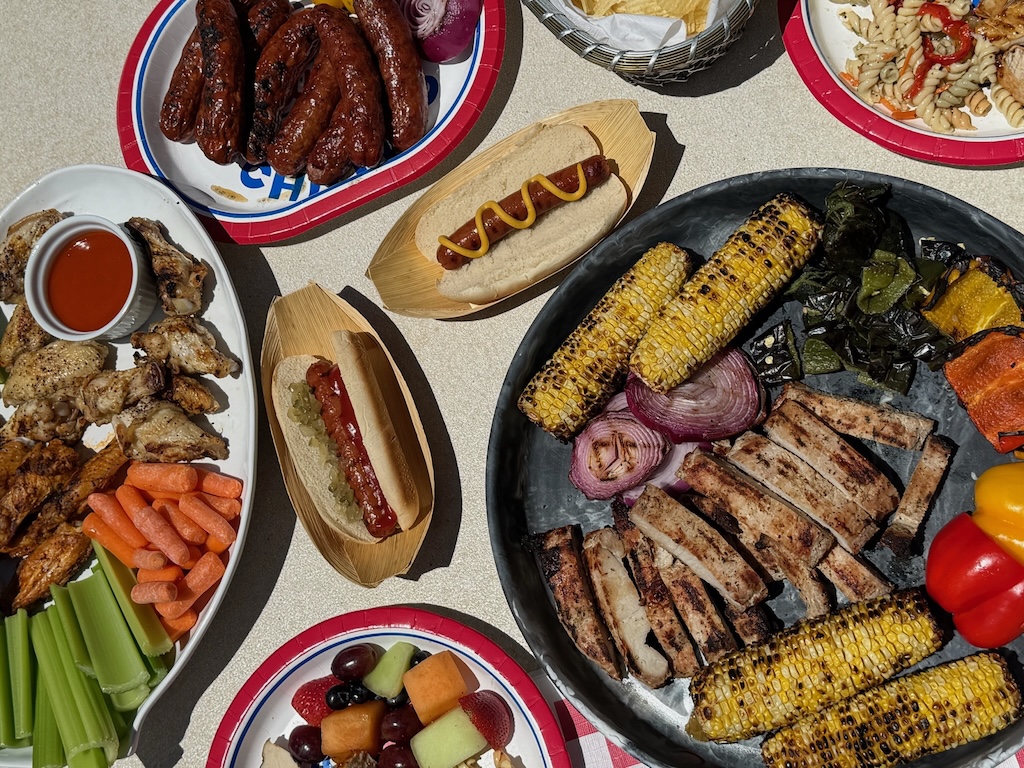
Summer grilling isn’t just about the quick-sear classics; sometimes it’s about slowing down, taking your time and letting the grill work its magic. In Part 1 of our Essential Guide to Summer Grilling, Chef Thomas Wenrich walked us through the fundamentals of chicken, steak and hot dogs. Now, he is sharing the deeper cuts in grilling: ribs that fall off the bone, marinades that work every time, safe cooking temperatures and clever hacks to make outdoor cooking effortless.
As Chef Thomas puts it, “Grilling isn’t complicated. It’s intentional. When you slow down and pay attention to the details, everything tastes better.”
———
Ribs: A Satisfying Labor of Love
For Chef Thomas, ribs are the perfect example of what patience in cooking can achieve. He starts the process long before the grill is lit, removing the membrane, trimming the rack and seasoning generously. “The prep work sets the stage,” he says. “It’s the foundation of everything that comes next.”
From there, he leans into low, slow, indirect heat, ideally between 225°F and 275°F. And he follows the classic 3-2-1 method: three hours of smoke, two hours wrapped, and a final hour unwrapped with sauce. “You’re building layers of tenderness,” he explains. The goal is an internal temperature between 195°F and 205°F, where the meat becomes irresistibly soft.
Once they are done, resting them is vital. Wrapped tightly for 10 to 15 minutes, the ribs stay warm and become even more tender. As for sauce, he recommends keeping it simple: “Use what you love. Let the meat shine first.”
———
The Formula for Building Flavor in Marinades
Ask Chef Thomas about marinades, and he’ll tell you he doesn’t think in recipes; he thinks in components. “A great marinade always has four things,” he says. “Salt, aromatics, acid and fat.” Garlic, herbs, citrus, vinegar, wine, buttermilk—they all play well together as long as the balance is right.
His go-to ratio is three parts fat to one part acid. Too much oil can cause flare-ups, and too much acid can toughen the meat if it sits too long. “Once you understand the framework,” he says, “you can create flavors that fit any occasion.”
———
Confidence Begins with Temperature
For Chef Thomas, a good thermometer is the most important tool a home cook can own. Insert it into the thickest part of the meat, away from the bone and give it a moment to settle. “Once you know your temps,” he says, “you can relax and enjoy the process.”
He keeps the numbers simple: chicken at 165°F, beef steaks at 145°F for medium rare, ground beef at 160°F, pork at 145°F, and ribs between 195°F and 205°F for tenderness. “It’s not about guessing,” he says, “it’s about confidence.”
———
Cuts to Make Entertaining Easy
When hosting, Chef Thomas gravitates toward cuts that are flavorful, forgiving and easy to portion. For chicken, he loves thighs, especially the Buena Mesa Cilantro Lime variety, because they take on flavor well and stay juicy. For beef, his top pick is hanger steak, with skirt steak a close second. Burgers, of course, are always a crowd pleaser, especially when paired with a toppings bar.
For pork, he recommends a Frenched pork loin for a show-stopping centerpiece, or pork griller steaks when time is tight. “They’re fully marinated and cook in minutes,” he says. “Perfect for feeding a crowd.”
———
Small Hacks Making a Big Difference
Before wrapping up, Chef Thomas shared a few of the clever tricks he passes along to friends and colleagues who want to elevate their grilling without buying new equipment. He cleans his grill with a halved onion, which naturally seasons the grates and smells incredible. Halved potatoes rubbed on hot grates create a natural non-stick surface. An ice cube placed on a burger before flipping keeps it juicy as it cooks. And for chicken breasts, a foil-wrapped brick helps them cook faster while retaining moisture.
Even buns get special treatment: he warms them by stacking them inside out on the grill as burgers finish cooking. And he always times his vegetables to hit the grill just as the meat is resting. “These little things add up,” he says. “They make grilling feel effortless.”
———
The conversation closed out with a final word for new grillers: take your time and invest in a good thermometer. “Every grill is different,” he says. “Every cut is different. But with patience and a little practice, anyone can become a great griller.”
- Stephanie Purvishttps://thefeed.blog/author/stephanie-purvis/
- Stephanie Purvishttps://thefeed.blog/author/stephanie-purvis/
- Stephanie Purvishttps://thefeed.blog/author/stephanie-purvis/